
How to Keep Your Canvas Print Squeaky Clean
Canvas prints have become a cornerstone of modern wall décor, used in homes, businesses, galleries, and studio spaces worldwide.
Their ability to transform a photograph or artwork into a textured, artistic display gives them a timeless appeal. However, like any display piece, canvas prints accumulate dust, airborne particles, and occasional marks over time.
Knowing how to clean a canvas print properly is essential not only for maintaining its appearance but also for ensuring its longevity.
Cleaning canvas is not the same as cleaning glass frames or traditional posters.
Canvas is a woven material that absorbs pigments, meaning the surface cannot be exposed to excessive moisture, harsh chemicals, or abrasive methods.
A well-printed canvas can last decades, but improper cleaning can shorten its lifespan significantly.
Understanding the Material: Why Canvas Requires Special Care

Canvas prints are typically made from either cotton or poly-cotton blends stretched over wooden frames.
Unlike gloss-finished posters or acrylic photo prints, canvases have a natural texture and a matte, porous surface.
The surface is often coated with a protective varnish to help guard against UV fading and dust, but this coating does not make the canvas waterproof. For this reason, cleaning methods need to be gentle, dry, and controlled.
Canvas is essentially a fabric. It behaves like fabric in certain ways, attracting dust, absorbing oils from hands, and reacting differently depending on room humidity and exposure to light.
At the same time, the printed pigments on the surface must be treated like delicate artwork. A balance must be maintained, ensuring that dust is removed without disturbing the ink.
Understanding these nuances helps you avoid the most common cleaning mistakes, such as using soaking wet cloths, spraying chemicals directly onto the canvas, or attempting to scrub marks aggressively. The correct methods are surprisingly simple yet highly effective.
The Importance of Regular Maintenance
One of the best ways to preserve a canvas print is to dust it regularly before dirt has a chance to settle. Dust builds gradually, and on a textured surface like canvas, particles can hide between the fibres.
Over months or years, these particles dull the vibrancy of colours and create a faint grey haze over the artwork. Regular light maintenance ensures your canvas remains bright, crisp, and visually striking.
Routine maintenance also protects the long-term structure of the canvas. Dust buildup can attract moisture, which over time may affect tension or cause micro-discolouration. While these processes happen slowly, preventative care keeps the artwork looking as sharp as the day it was hung.
Ideally, a canvas should be lightly dusted every few weeks. Homes close to roads, pet-friendly households, or rooms with open windows may require more frequent attention.
Proper maintenance becomes part of the artwork’s lifespan, just like cleaning a screen, polishing furniture, or washing curtains.
How to Dust a Canvas Print Safely
Dusting is the simplest and safest method of cleaning a canvas print. It removes loose particles, preserves colour quality, and prevents accumulation. The key is choosing the right tools and using them gently.
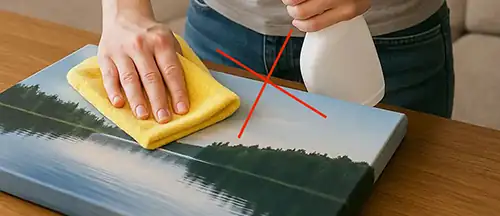
Most people find that a soft, dry microfiber cloth works perfectly. It traps dust rather than pushing it around and is gentle enough not to damage the surface.
For textured or heavily patterned canvases, a microfiber duster or soft brush can reach the tiny grooves more easily. The important thing is to avoid anything abrasive.
To dust properly, start at the top of the canvas and wipe downward using long, gentle strokes. This prevents dust from resettling on cleaned sections.
Pay attention to the edges of the canvas and the stretcher bars, where particles tend to collect. For larger pieces, support the canvas from behind with your free hand to avoid bending the frame while cleaning.
If dust has collected heavily over time, a soft brush, such as a dry artist’s paintbrush, is highly effective. It can reach between the fibres without scratching the print. Just remember to use light strokes and avoid applying pressure.
Cleaning Deeper Without Damaging the Canvas
Sometimes dusting alone isn’t enough, especially if the canvas has picked up smudges, accidental splashes, or sticky residues. This is where many people unknowingly damage their artwork by using cleaning sprays, window cleaners, kitchen wipes, or overly damp cloths. Canvas is extremely sensitive to liquid. Too much moisture can cause:
- Ink softening
- Fabric warping
- Rippling across the surface
- Discolouration
- Weakening of the varnish layer
To clean safely, moisture must be minimal and controlled.
For light marks, a slightly damp microfiber cloth can be used, but it must be barely damp, not wet. To prepare it, dampen a corner of the cloth with water, then wring it thoroughly until it feels almost dry. Gently wipe the affected area in soft circular or horizontal motions. Never scrub.
Alternatively, a cotton swab dipped in a small amount of water can help target tiny marks without affecting the surrounding area. Move slowly, work patiently, and never apply pressure.
In most cases, even stubborn-looking marks lift easily when treated gently.
However, if the mark doesn’t disappear with light effort, it’s better to stop than risk damaging the canvas. Some stains simply cannot be removed without professional restoration.
What You Should Never Use on a Canvas Print
There are certain cleaning methods that should never be used on canvas prints under any circumstances. Because canvas is fabric-based and printed with pigmented inks, it reacts poorly to chemicals and excessive moisture.
Avoid using:
- Window or glass cleaners
- Furniture polish
- All-purpose household sprays
- Detergent-based wipes
- Soap and water mixtures
- Vinegar, lemon, or any acidic cleaning solution
- Baby wipes or antibacterial wipes
- Paper towels (too abrasive)
- Abrasive sponges or scrubbing pads
Each of these products can damage the ink, remove the protective coating, or create irreversible marks on the surface.
Even products marketed as "gentle" can contain chemicals or fibres that scratch or dull the finish. When cleaning canvas, simplicity is best: dry methods first, minimal moisture second, and no chemicals at all.
Removing Smudges, Fingerprints, and Oily Marks
Fingerprints are one of the most common marks left on canvas prints. Natural oils from skin transfer easily to the textured surface, especially when the print is handled during mounting or repositioning. Fortunately, these marks are usually easier to remove than they appear.
A dry microfiber cloth often removes fingerprints on its own. The soft fibres lift the oils without spreading them. If a fingerprint remains visible, a barely damp cloth can help. Just remember that canvas absorbs water quickly, so the cloth must only be lightly moistened.
For more stubborn oil marks, a very small amount of distilled water may be used, again, with extreme caution. Never use tap water if it contains minerals that may leave streaks or residue. Gentle, slow, circular movements are most effective, but even with these steps, avoid overworking the area.
If the print has a varnished or laminated finish, fingerprints lift more easily. Laminated canvases are more resistant to oils and minor marks, though the same caution rules apply.
Can You Use a Vacuum Cleaner on a Canvas Print?
Vacuuming is possible in certain circumstances, but it must be done with great care. Never use a vacuum’s main nozzle directly on the canvas surface.
Instead, use a vacuum with a soft body brush attachment and hold it slightly away from the artwork, allowing the suction to lift loose dust without making physical contact.
However, for most households, a microfiber cloth or feather duster is safer and easier. Vacuuming is best reserved for:
- Very large canvases
- Commercial installations
- Canvases hung in high-traffic, dusty environments
Even then, control is essential to avoid impact or accidental scratching.
Cleaning the Edges and Back of the Canvas
The edges of a canvas often accumulate dust faster than the front surface. Because they protrude slightly from the wall, they are exposed to dust floating in the air. Cleaning the edges is straightforward; simply follow the same gentle dusting approach used for the front.
The back of the canvas can also collect cobwebs or dust, especially in homes with textured walls, pets, or open windows. Dusting the back is safe as long as you avoid applying pressure to the canvas fabric. Support the frame while cleaning and avoid pressing the material inward.
If the canvas has open sections around the stretcher bars, avoid inserting cloths or fingers through the openings, as this may stretch or warp the fabric from behind.
Cleaning a Canvas Print with a Protective Varnish or Lamination
Some canvas prints come with a specialised varnish, laminate, or UV-protective coating applied after printing.
This protective layer helps defend the artwork from dust, moisture, and sunlight. These canvases are generally easier to clean, but the same gentle approach applies.
A varnished canvas resists minor marks better than a bare canvas. Fingerprints lift more easily, and light splashes are less likely to stain permanently.
While this protective layer adds durability, it should not be mistaken for waterproofing. Excessive moisture can still soften the varnish or disturb the inks beneath.
As a rule:
- Use minimal moisture
- Avoid chemicals entirely
- Continue using soft cloths rather than abrasive tools
The varnish simply gives you more margin for error; it does not replace careful maintenance.
How to Clean a Canvas Print That Has Yellowed or Aged
Yellowing usually occurs due to long-term exposure to UV light, humidity, cigarette smoke, or airborne oils. Unfortunately, yellowing is one of the most difficult issues to reverse, and in many cases, it cannot be restored through cleaning alone.
However, some steps can help improve the appearance:
- Dusting thoroughly can remove surface haze
- Gently wiping with a slightly damp cloth can reduce grime
- Improving room ventilation can prevent further discolouration
- Moving the artwork away from direct sunlight can halt the yellowing process
If the canvas has yellowed deeply, restoration may require professional services. Restorers can sometimes revarnish or clean the surface using specialist techniques that are not safe to replicate at home.
How to Prevent Canvas Prints From Getting Dirty
Preventive care is far easier and more effective than restoring a damaged or dirty canvas. With the right placement and environment, your canvas will stay cleaner for much longer.
Here are key ways to prevent dirt buildup:
- Hang canvases away from humidity (bathrooms, laundry rooms).
- Keep them away from direct sunlight to prevent fading.
- Avoid placing them in kitchens where steam, oil, and grease circulate.
- Do not touch the printed surface when repositioning the artwork.
- Close windows during windy weather to reduce airborne particles.
- Use air purifiers in rooms prone to dust.
Even with perfect placement, a small amount of dust is unavoidable, which makes occasional cleaning essential.
What to Do if Your Canvas Print Gets Wet
Accidental spills or dampness can be stressful. If your canvas becomes wet, the priority is quick and careful action.
First, gently blot the moisture with a clean, dry cloth. Do not rub, as rubbing spreads the water and may blur the ink. Blotting absorbs liquid without pressing it further into the fibres.
Once surface moisture is removed, allow the canvas to air dry naturally in a room with good airflow. Do not use hairdryers, heaters, or direct sunlight, as these can warp the wood or distort the canvas.
If a large amount of water has soaked through, the canvas may stretch or ripple as it dries. Minor ripples can sometimes be corrected with professional re-stretching, but severe water damage is difficult to reverse.
How to Clean a Canvas Print That Has Been Exposed to Smoke
Canvas prints are particularly vulnerable to airborne contaminants from smoke, whether from cigarettes, cooking, or fireplaces. Smoke particles can cling to fibres, creating a yellow or brown tint and a lingering smell.
To clean a smoke-exposed canvas:
- Begin with thorough dry dusting to remove surface particles.
- Use a barely damp cloth to lift deeper residue.
- Allow the canvas to air out in a non-humid, ventilated room.
For severe smoke exposure, odour-absorbing products such as activated charcoal placed nearby may help. However, if the print has absorbed heavy smoke particles, specialist cleaning may be required.
When to Seek Professional Cleaning
Sometimes a canvas print needs more than a simple dusting or wipe-down. Professional conservators and canvas restoration experts have specialised tools and safe chemical treatments designed specifically for artwork. It is worth considering professional help when:
- The canvas has mould or mildew
- The print has deep staining
- There is significant yellowing
- Paint or ink has deteriorated
- The frame is warped from moisture
- The artwork holds high sentimental or monetary value
Professionals can restore many issues safely, but attempting advanced cleaning at home can worsen the damage.
How to Store Canvas Prints Safely
If you need to store your canvas print temporarily or long-term, proper storage is essential to keep it clean and protected.
Store canvas prints in a dry, cool environment, a dust-free room, an area free from direct sunlight, and in a vertical position whenever possible.
Always avoid basements, attics, or damp areas. If possible, wrap the canvas in acid-free paper or a breathable cloth. Never wrap canvas in plastic, as plastic traps moisture and can lead to mould.
Long-Term Preservation and Environmental Factors
Environmental conditions play a large role in how clean and vibrant your canvas remains over time. Humidity, heat, and light exposure all influence fabric tension and colour preservation. Keeping canvases in rooms with stable temperatures, good ventilation, and limited sunlight helps ensure their longevity.
Airborne oils from cooking or scented candles can also subtly affect the surface of canvas prints. While occasional exposure is not harmful, placing canvases too close to kitchens or heat sources accelerates wear. Simply being mindful of the environment helps prevent most cleaning challenges.
Final Thoughts: Keeping Your Canvas Looking Beautiful for Years
Cleaning a canvas print properly is not complicated, but it does require understanding, patience, and gentle methods. Dusting regularly, using minimal moisture, and avoiding harsh chemicals are the cornerstones of safe maintenance. With the right techniques, your canvas will maintain its vibrant colours, crisp details, and smooth texture for many years.
Canvas prints are more than decorative pieces; they often hold personal stories, memories, and artistic expressions. Preserving them ensures those stories remain alive on your walls. With careful cleaning and thoughtful placement, your canvas will continue to look stunning long into the future.